How Long to Run a Pool Pump in Florida (the Real Answer)
How long to run a pool pump in Florida: 8-10 hours in summer for single-speed, near-continuous low RPM…
Read more →Every DIY pool heater idea is fighting the same enemy: a pool is an enormous amount of water, and heating water takes an enormous amount of energy. Raising a 15,000-gallon pool a few degrees takes roughly the energy a house uses in a day — no coil of black hose cheats that physics. What DIY can do, and do brilliantly in Florida, is stop the heat you already have from escaping, and harvest free sun with enough surface area to matter. Here’s the full menu, ranked by dollars-per-degree, with the myths labeled.
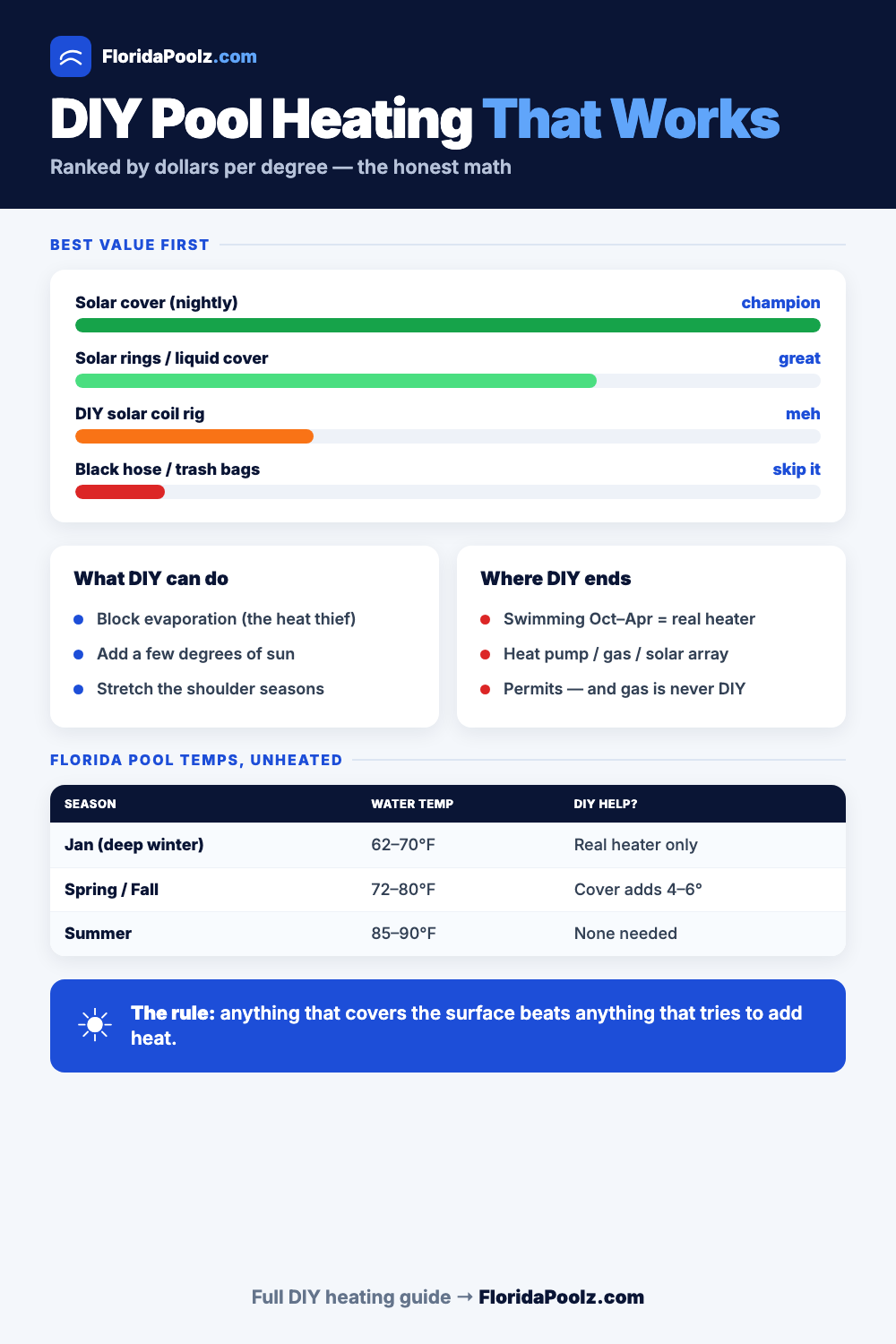
A pool loses most of its heat from the surface, and the biggest thief is evaporation — every gallon that evaporates carries a massive load of heat with it. Wind across the surface and cool nights do the rest. That one fact ranks the whole DIY menu: anything that covers the surface beats anything that adds heat. It’s also why our evaporation numbers run an inch-plus a week in season — heat and water leave together.
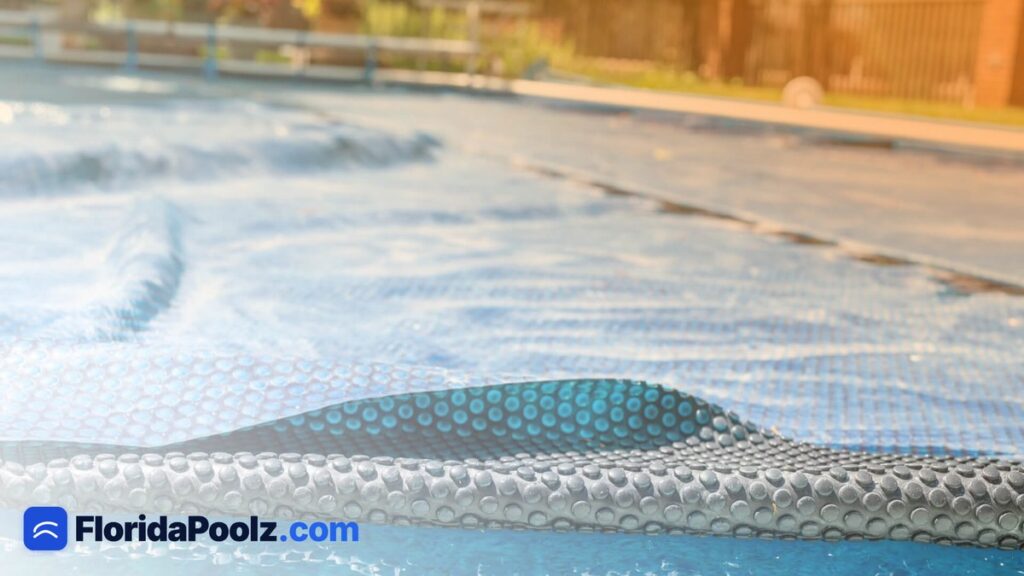
The bubble-wrap-style solar cover does two jobs at once: it blocks evaporation (the heat thief and the water bill) and converts sun into water heat all day. Used nightly through a Florida “winter,” a cover keeps a pool several degrees warmer than an open pool, for the price of a nice dinner. Nothing else on this list comes close per dollar. The honest cost is the hassle: dragging it on and off, and either buying a reel or wrestling a wet 400-square-foot blanket. That hassle is why half the solar covers in Florida live rolled up beside the pool doing nothing.
Solar rings (individual floating discs) cover maybe 70–80% of the surface and go on and off one at a time — less effective than a full cover, dramatically easier to live with. Liquid solar cover (a monthly-dosed fatty-alcohol film that slows evaporation) is the zero-effort floor of the category: a real, measurable reduction in evaporative loss, roughly half what a physical cover achieves, invisible and swim-through. Both are legitimate; both are compromises the cover-haters accept knowingly.
The build every Florida garage has attempted: a few hundred feet of black irrigation hose coiled on a sheet of plywood, plumbed off the return line. Does it heat water? Absolutely — the water exiting the coil on a sunny afternoon is impressively hot. Does it heat the pool? Barely. The surface area of a coil rig is a rounding error against 15,000 gallons; run all day it adds a degree, maybe — a proper cover holds four. The materials cost more than a solar cover, the pump works harder pushing through hundreds of feet of half-inch hose, and the rig degrades in UV within a couple of seasons. Verdict: a fun weekend project, a poor heating strategy. If coil-on-plywood thinking appeals to you, that instinct scaled up correctly is a real rooftop solar array — see below.
The rest of the folk catalog — garden hose on the roof, black trash bags floated on the surface, barrels of sun-warmed water poured in at dusk — all “work” in the sense that a candle warms a room. Floating black plastic is a worse solar ring; a garden hose delivers hot water by the gallon into a pool that holds fifteen thousand. Do them for fun; expect nothing measurable.
When the goal moves from “take the edge off March” to swimming comfortably from October to April, you’ve left DIY territory. The three grown-up options, Florida-ranked:
All three involve permits in Florida — plumbing changes, electrical circuits, or gas lines — and gas work is never a homeowner job. Sizing, install quotes, and the heat-pump-vs-solar decision for your county’s winter is licensed-contractor conversation; Florida pool equipment pros are in the directory.
The quiet consensus among people who swim year-round here: a real heater sized honestly, plus a solar cover used religiously. The cover halves what the heater has to replace every night — which halves the operating bill, which is the number that actually hurts. A heat pump fighting open-water evaporation all February is a money bonfire; the same heat pump under a covered pool coasts. If you buy nothing else from this article, buy the cover.
And mind the pump-hours interaction: any solar harvesting — rigs, arrays, even cover-warmed water — only circulates heat when the pump runs, so daytime pump scheduling matters; here’s how long to run it and when.
Used nightly, several degrees over an uncovered pool — commonly the difference between a 72°F pool nobody enters and a 78°F pool the kids won’t leave. Effect scales with how consistently it goes on at night, which is the whole game.
They’re a cheap, fragile imitation of solar rings — some evaporation blocking, some solar gain, shredding into your skimmer within weeks. A real cover or rings cost little enough that the bags aren’t worth the cleanup.
As a project, sure. As heating, no — the surface area is hopeless against pool volume, and the materials outprice a solar cover that outperforms it several times over. The correct version of the idea is a permitted rooftop solar array.
The pad and plumbing are within an ambitious owner’s reach, but the dedicated electrical circuit needs a permit and, realistically, an electrician — and DIY electrical near pool water is where insurance adjusters stop returning calls. Gas heaters are entirely off the DIY table.
Unheated: mid-60s to low 70s in January (colder in the Panhandle), mid-80s to 90 in August. The DIY methods move the shoulder seasons — March and November — by a few degrees; the coldest months belong to real heaters.

We build Florida's pool contractor directory from county permit records, DBPR license data, and verified Google reviews — and write these guides from the same data, with input from the licensed builders and service pros listed on the site.
Straight-talking, Florida-specific help — written from permit data and local pros.
How long to run a pool pump in Florida: 8-10 hours in summer for single-speed, near-continuous low RPM…
Read more →
Pool leak detection starts free: the bucket test settles leak vs evaporation, dye finds the spot. Where Florida…
Read more →
How to lower pH in a pool with muriatic acid: dose amounts by pool size, safe handling steps,…
Read more →